
Back to Blog
SkateparksAction SportsCustom DesignOutdoor Recreation
Private Skateparks for Utah Backyards
February 10, 2025Valley Design Build7 min read
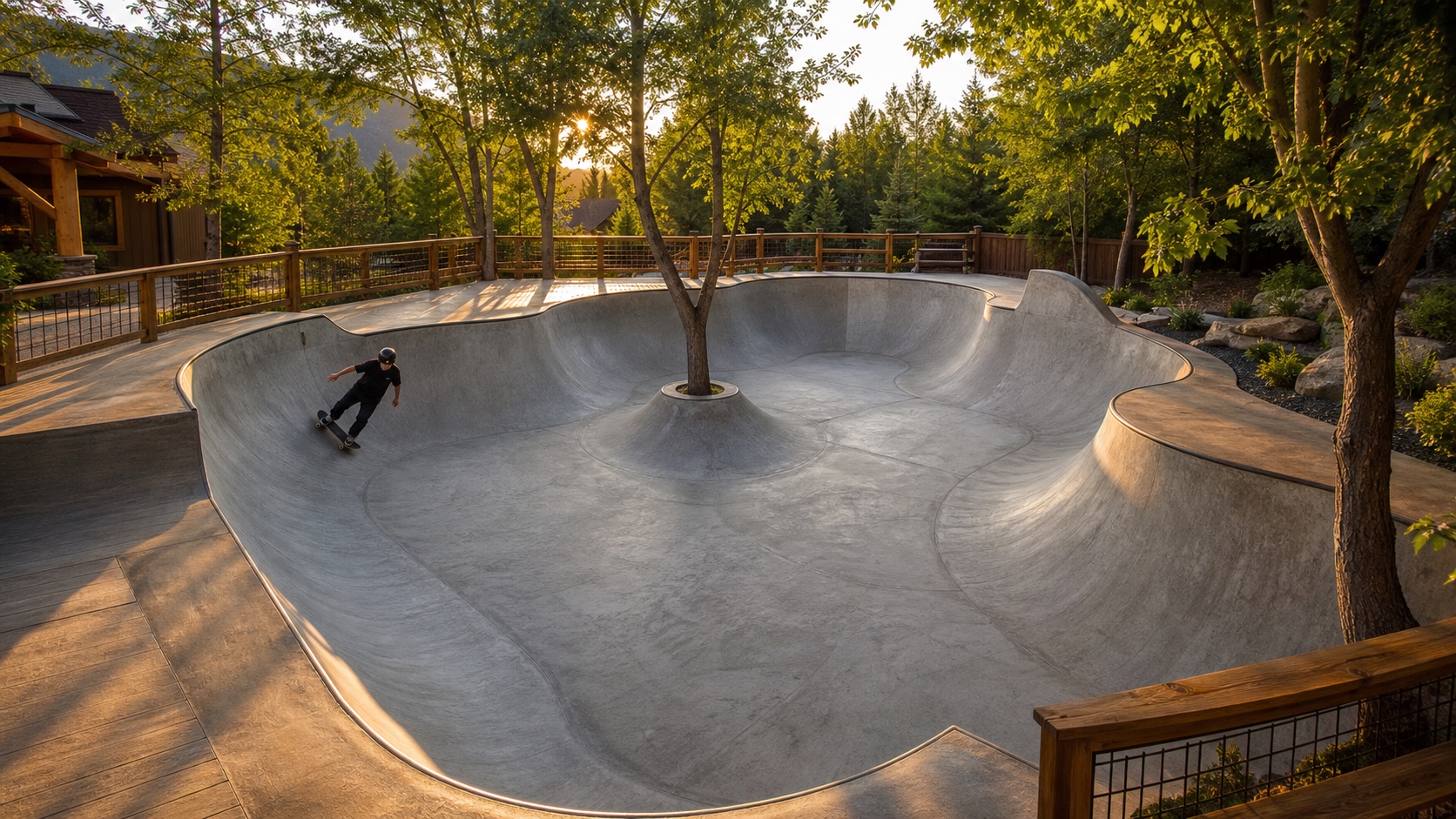
There's a moment every skating parent knows: watching your kid finally land a trick they've been working on for months. Now imagine that moment happening in your backyard, any day of the week, without driving to a crowded park.
Private skateparks were once mostly for professional athletes. Today, more Utah families are finding out that a real skate feature at home is possible when the site, drainage, concrete, and rider needs are handled correctly.
Unlimited Practice Time Public parks have hours, crowds, and skill-level conflicts. Your backyard doesn't. Want to skate at 6 AM before work? Done. Need to practice the same trick 200 times? No one's waiting.
Customized to Your Riding Public parks are designed for everyone, which means they're optimized for no one. A private park is built around how you actually ride, your favorite obstacles, your comfort zone, your progression goals.
Family Bonding When the park is at home, skating becomes a family activity. Parents who never touched a board find themselves trying. Siblings push each other to learn. The backyard becomes a gathering place.
Property Value High-end outdoor recreation features can be real property assets. A well-designed skate feature attracts the right buyer when the time comes and makes the home easier to remember.
Safety Control You know the surface condition. You control who rides. You can add padding, lighting, and features at the appropriate pace for developing skaters.
Street elements work well in smaller spaces and can disguise as landscape features when not in use.
Transition features require more space but offer endless progression potential.
We design parks that offer variety without wasted space.
Advantages:
Considerations:
Concrete is ideal when you know exactly what you want and plan to stay in the home long-term.
Advantages:
Considerations:
Modular works well as a starting point or for families who may relocate.
Minimum Viable (500-800 sq ft): A single element, mini ramp, bowl corner, or street section. Enough for focused practice on specific tricks.
Small Park (800-1,500 sq ft): Multiple elements or a complete mini ramp with landing area. Room for variety and flow.
Medium Park (1,500-3,000 sq ft): Full bowl or multiple zones. Space for different skill levels to ride simultaneously.
Large Park (3,000+ sq ft): Complete park with multiple zones, flow lines, and room for spectators.
We've built impressive features in surprisingly compact spaces. Creativity with design maximizes what's possible.
Scale and Complexity More features and larger footprints increase costs proportionally. A single mini ramp differs significantly from a multi-zone park.
Material Choice Concrete costs more upfront than modular but lasts indefinitely with minimal maintenance.
Site Preparation Flat, accessible sites cost less than sloped terrain requiring earthwork.
Feature Types Deep bowls and complex transitions require more concrete and expertise than simple street elements.
Finishing Details Coping material, color treatments, and decorative elements add to the investment.
Rough Ranges:
Every project is custom. We provide detailed estimates after understanding the riders, the site, and the scope.
1. Riding Assessment We learn how you and your family skate. What do you love? What are you working toward? What frustrates you at public parks?
2. Site Analysis We evaluate your property for optimal placement considering drainage, access, visibility, noise, and integration with existing features.
3. Concept Development Initial designs explore what is possible. We sketch options, discuss tradeoffs, and refine the layout.
4. Detailed Design Engineering drawings specify every curve, every transition, every detail. Nothing is left to chance in construction.
5. Construction Our crews build to skateboard-specific standards. The tolerances and surface requirements differ from standard concrete work.
6. First Session The real test. We skate the park, note any refinements, and ensure everything flows as designed.
Landscape Integration Berms, plantings, and hardscape can frame skate features naturally. The bowl edge becomes a retaining wall. The mini ramp backs into a slope.
Lighting Integrated lighting extends sessions into evening. Proper placement eliminates shadows on riding surfaces.
Spectator Space Benches, shade structures, and viewing areas make the park social. Parents watch comfortably while kids progress.
Combination Features Pumptracks, basketball courts, and other recreation elements can share space efficiently with skate features.
Surface Quality You control the surface condition. Cracks, debris, and moisture are managed proactively.
Feature Progression Build features appropriate to current skill levels. Add difficulty as riders progress.
Padding Options Foam pits, padded coping, and softer materials can be incorporated during construction.
Lighting No more riding in dangerous twilight conditions. Proper lighting keeps sessions safe.
Access Control You decide who rides. No unpredictable strangers, no skill-level conflicts during practice.
Your backyard can become the place your family skates, the place friends gather, the place tricks finally get landed.
Contact Valley Design Build at (801) 510-7142 to explore private skatepark possibilities. We build features that get used every single day.
Private skateparks were once mostly for professional athletes. Today, more Utah families are finding out that a real skate feature at home is possible when the site, drainage, concrete, and rider needs are handled correctly.
Why Private Skateparks Are Trending
The backyard skatepark movement has exploded for several reasons:Unlimited Practice Time Public parks have hours, crowds, and skill-level conflicts. Your backyard doesn't. Want to skate at 6 AM before work? Done. Need to practice the same trick 200 times? No one's waiting.
Customized to Your Riding Public parks are designed for everyone, which means they're optimized for no one. A private park is built around how you actually ride, your favorite obstacles, your comfort zone, your progression goals.
Family Bonding When the park is at home, skating becomes a family activity. Parents who never touched a board find themselves trying. Siblings push each other to learn. The backyard becomes a gathering place.
Property Value High-end outdoor recreation features can be real property assets. A well-designed skate feature attracts the right buyer when the time comes and makes the home easier to remember.
Safety Control You know the surface condition. You control who rides. You can add padding, lighting, and features at the appropriate pace for developing skaters.
Design Options: What Can You Build?
Private skateparks range from a single element to complete parks. Here's what's possible:Street Plaza Elements
Street skating mimics urban environments, stairs, rails, ledges, gaps. These elements can be integrated into landscape design:- Ledges - Concrete or granite blocks for grinds and slides
- Manual pads - Low, flat surfaces for balance tricks
- Stairs and gaps - From 2-stair to larger sets
- Rails - Round, flat, and kinked options
- Hubbas - Angled ledges down stairs
- Banks - Angled surfaces for wall rides
Street elements work well in smaller spaces and can disguise as landscape features when not in use.
Transition Features
Transition skating involves curved surfaces, bowls, ramps, and halfpipes:- Mini ramps - 3-6 foot halfpipes, the most popular backyard feature
- Quarter pipes - Single curved walls
- Bowls - Continuous curved pools from shallow to deep
- Pump bumps - Small rollers for flow
- Spines - Back-to-back quarter pipes
Transition features require more space but offer endless progression potential.
Hybrid Designs
Most private parks combine elements:- A bowl with street features around the edges
- A mini ramp with a ledge and rail nearby
- A pump track that flows into skate features
We design parks that offer variety without wasted space.
Concrete vs. Modular: The Construction Decision
Two main approaches dominate private skatepark construction:Poured Concrete
Concrete is the professional standard:Advantages:
- Permanent, weather-resistant
- Infinite design flexibility
- Smooth, consistent surface
- Low long-term maintenance
- Highest resale value
Considerations:
- Higher initial investment
- Longer construction time
- Requires skilled craftsmen
- Permanent placement
Concrete is ideal when you know exactly what you want and plan to stay in the home long-term.
Modular/Prefab Ramps
Modular ramps come pre-built or as kits:Advantages:
- Lower upfront cost
- Faster installation
- Can be rearranged
- Take it when you move
Considerations:
- Limited customization
- Wood surfaces require maintenance
- Seams between sections
- May look less integrated
Modular works well as a starting point or for families who may relocate.
Our Recommendation
For serious skating families investing in their property, concrete delivers the best long-term value. The surface, durability, and integration with your landscape justify the investment.Space Requirements
Skateparks scale to available space:Minimum Viable (500-800 sq ft): A single element, mini ramp, bowl corner, or street section. Enough for focused practice on specific tricks.
Small Park (800-1,500 sq ft): Multiple elements or a complete mini ramp with landing area. Room for variety and flow.
Medium Park (1,500-3,000 sq ft): Full bowl or multiple zones. Space for different skill levels to ride simultaneously.
Large Park (3,000+ sq ft): Complete park with multiple zones, flow lines, and room for spectators.
We've built impressive features in surprisingly compact spaces. Creativity with design maximizes what's possible.
Cost Factors
Private skatepark costs vary based on:Scale and Complexity More features and larger footprints increase costs proportionally. A single mini ramp differs significantly from a multi-zone park.
Material Choice Concrete costs more upfront than modular but lasts indefinitely with minimal maintenance.
Site Preparation Flat, accessible sites cost less than sloped terrain requiring earthwork.
Feature Types Deep bowls and complex transitions require more concrete and expertise than simple street elements.
Finishing Details Coping material, color treatments, and decorative elements add to the investment.
Rough Ranges:
- Single modular ramp: $5,000-$15,000
- Small concrete feature: $15,000-$40,000
- Medium concrete park: $40,000-$80,000
- Large custom park: $80,000-$150,000+
Every project is custom. We provide detailed estimates after understanding the riders, the site, and the scope.
The Design Process
Building a skatepark that works requires more than pouring concrete:1. Riding Assessment We learn how you and your family skate. What do you love? What are you working toward? What frustrates you at public parks?
2. Site Analysis We evaluate your property for optimal placement considering drainage, access, visibility, noise, and integration with existing features.
3. Concept Development Initial designs explore what is possible. We sketch options, discuss tradeoffs, and refine the layout.
4. Detailed Design Engineering drawings specify every curve, every transition, every detail. Nothing is left to chance in construction.
5. Construction Our crews build to skateboard-specific standards. The tolerances and surface requirements differ from standard concrete work.
6. First Session The real test. We skate the park, note any refinements, and ensure everything flows as designed.
Integration with Your Property
A great private skatepark doesn't feel like an afterthought:Landscape Integration Berms, plantings, and hardscape can frame skate features naturally. The bowl edge becomes a retaining wall. The mini ramp backs into a slope.
Lighting Integrated lighting extends sessions into evening. Proper placement eliminates shadows on riding surfaces.
Spectator Space Benches, shade structures, and viewing areas make the park social. Parents watch comfortably while kids progress.
Combination Features Pumptracks, basketball courts, and other recreation elements can share space efficiently with skate features.
Safety Considerations
Private parks can be safer than public parks:Surface Quality You control the surface condition. Cracks, debris, and moisture are managed proactively.
Feature Progression Build features appropriate to current skill levels. Add difficulty as riders progress.
Padding Options Foam pits, padded coping, and softer materials can be incorporated during construction.
Lighting No more riding in dangerous twilight conditions. Proper lighting keeps sessions safe.
Access Control You decide who rides. No unpredictable strangers, no skill-level conflicts during practice.
Making It Happen
Ready to bring skating home? Here's how we begin:- Initial consultation - We discuss the riders, goals, and property
- Site assessment - Evaluating possibilities and constraints
- Concept design - Options that fit your space and goals
- Detailed proposal - Complete scope, timeline, and investment
- Construction - Typically 3-8 weeks depending on complexity
- Opening day - The first of thousands of sessions
Your backyard can become the place your family skates, the place friends gather, the place tricks finally get landed.
Contact Valley Design Build at (801) 510-7142 to explore private skatepark possibilities. We build features that get used every single day.
Ready to Talk Through the Site?
Get a free consultation from Valley Design Build.
More from Our Blog
Winter Fun at Home: Private Ice Rinks
A backyard ice rink can make winter easier to enjoy at home. Learn the options, from simple natural ice setups to refrigerated systems.
Read moreCustom Playhouses and Treehouses Built to Last
Custom playhouses and treehouses can be sturdy, safe, and specific to the kids, the yard, and the way the structure will be used.
Read moreCreating Year-Round Entertainment Spaces
Utah's four seasons don't have to limit your outdoor entertaining. Learn how to design spaces that work beautifully from January through December.
Read more