
Back to Blog
PumptracksActive LivingFamily Recreation
The Rise of Backyard Pumptracks
July 18, 2025Valley Design Build4 min read
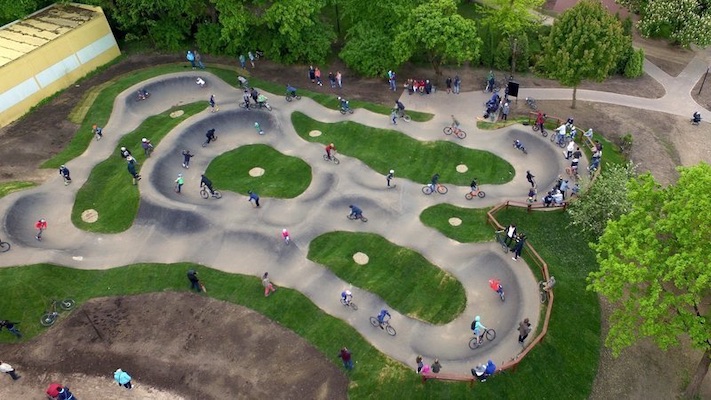
Something's happening in backyards across Northern Utah. Between the pools and the patios, families are building pumptracks, and they're changing how kids (and adults) spend their time at home.
Think of it as a roller coaster you power yourself.
Originally developed for mountain bikers to practice technique, pumptracks have evolved into a complete sport. They work for:
One feature, multiple sports, endless hours of active play.
Screen Time Solution Parents are desperate for outdoor activities that compete with video games. A backyard pumptrack offers real challenge, skill progression, and physical engagement that kids actually choose over screens.
All-Ages Appeal A toddler on a balance bike uses the same track as a teenager on a scooter and a parent on a mountain bike. Everyone rides together, and everyone improves together.
Year-Round Use In Utah, a well-designed pumptrack gets used 300+ days a year. Light rain? No problem. A little snow? Brush it off. The surface dries quickly and the riding goes on.
Low Maintenance Unlike pools or lawns, pumptracks need almost no maintenance. Occasional sweeping, maybe a sealcoat every few years. That's it.
Skill Development Beyond exercise, pumptracks develop balance, coordination, timing, and body awareness. These skills transfer directly to skiing, snowboarding, skateboarding, and other action sports.
Design Considerations
Construction Elements
Space Requirements A basic loop can fit in 1,500-2,000 square feet. More space allows for longer runs, multiple lines, and additional features. We've built tracks in surprisingly compact spaces.
Asphalt
Concrete
We've built both, and we help families choose based on their priorities and budget.
Dirt tracks work well as a first step before committing to a permanent surface.
We then develop a design that fits your space and goals, with features sized appropriately for your family.
The possibilities expand with imagination and space.
Contact Valley Design Build to explore pumptrack possibilities for your property. We build features that get used every single day.
What Exactly Is a Pumptrack?
A pumptrack is a continuous loop of rollers and berms designed to be ridden without pedaling. Riders generate momentum by "pumping", using their body weight to push down into the troughs and lift through the peaks.Think of it as a roller coaster you power yourself.
Originally developed for mountain bikers to practice technique, pumptracks have evolved into a complete sport. They work for:
- Bikes - From balance bikes to BMX to mountain bikes
- Scooters - The fastest-growing segment of pumptrack users
- Skateboards - With the right design and surface
- Inline skates - Another natural fit
One feature, multiple sports, endless hours of active play.
Why Pumptracks Are Taking Over
Several factors explain the pumptrack boom:Screen Time Solution Parents are desperate for outdoor activities that compete with video games. A backyard pumptrack offers real challenge, skill progression, and physical engagement that kids actually choose over screens.
All-Ages Appeal A toddler on a balance bike uses the same track as a teenager on a scooter and a parent on a mountain bike. Everyone rides together, and everyone improves together.
Year-Round Use In Utah, a well-designed pumptrack gets used 300+ days a year. Light rain? No problem. A little snow? Brush it off. The surface dries quickly and the riding goes on.
Low Maintenance Unlike pools or lawns, pumptracks need almost no maintenance. Occasional sweeping, maybe a sealcoat every few years. That's it.
Skill Development Beyond exercise, pumptracks develop balance, coordination, timing, and body awareness. These skills transfer directly to skiing, snowboarding, skateboarding, and other action sports.
What Goes Into a Backyard Pumptrack?
Building a pumptrack requires specific expertise:Design Considerations
- Flow speed appropriate for skill levels
- Feature sizing matched to intended users
- Entry and exit points for safety
- Spectator areas for parents
- Integration with landscape
Construction Elements
- Engineered subgrade for drainage
- Compacted base material
- Shaped asphalt or concrete surface
- Proper banking angles on berms
- Smooth transitions between features
Space Requirements A basic loop can fit in 1,500-2,000 square feet. More space allows for longer runs, multiple lines, and additional features. We've built tracks in surprisingly compact spaces.
Asphalt vs. Concrete
Most residential pumptracks use one of two surfaces:Asphalt
- Lower initial cost
- Easier to modify later
- Repairs are straightforward
- May require sealcoat every 3-5 years
- Natural dark color
Concrete
- Higher durability
- More design flexibility
- Color options available
- Less maintenance long-term
- Longer construction time
We've built both, and we help families choose based on their priorities and budget.
The Dirt Option
For some properties, a dirt pumptrack makes sense:- Lower cost
- More forgiving for crashes
- Easier to reshape and experiment
- Requires more maintenance
- Not ideal for scooters or skateboards
- Best for dedicated mountain bikers
Dirt tracks work well as a first step before committing to a permanent surface.
Design Process
Every pumptrack starts with understanding:- Who will ride most often?
- What skill levels need accommodation?
- What sports will be practiced?
- How does the track relate to other backyard features?
- What should the track be able to handle long term?
We then develop a design that fits your space and goals, with features sized appropriately for your family.
Beyond the Track
A pumptrack often becomes the anchor for a larger action sports zone:- Skate elements adjacent to the track
- Jump lines for bikes
- Manual pads and balance features
- Viewing and seating areas
- Lighting for evening sessions
The possibilities expand with imagination and space.
Making It Happen
Ready to bring a pumptrack home? Here's how we start:- Site visit - We assess your space and discuss possibilities
- Concept design - Rough layouts showing what fits
- Refined design - Detailed plans with feature specifications
- Construction - Typically 2-4 weeks depending on complexity
- First laps - The best day of the project
Contact Valley Design Build to explore pumptrack possibilities for your property. We build features that get used every single day.
Ready to Talk Through the Site?
Get a free consultation from Valley Design Build.
More from Our Blog
Winter Fun at Home: Private Ice Rinks
A backyard ice rink can make winter easier to enjoy at home. Learn the options, from simple natural ice setups to refrigerated systems.
Read moreCustom Playhouses and Treehouses Built to Last
Custom playhouses and treehouses can be sturdy, safe, and specific to the kids, the yard, and the way the structure will be used.
Read moreCreating Year-Round Entertainment Spaces
Utah's four seasons don't have to limit your outdoor entertaining. Learn how to design spaces that work beautifully from January through December.
Read more